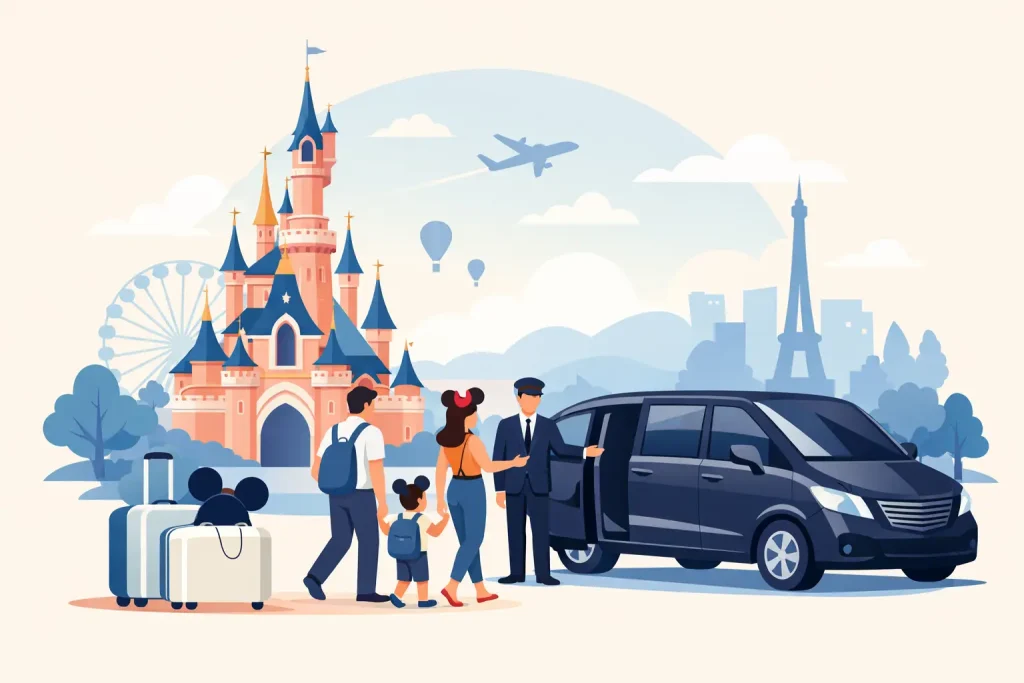
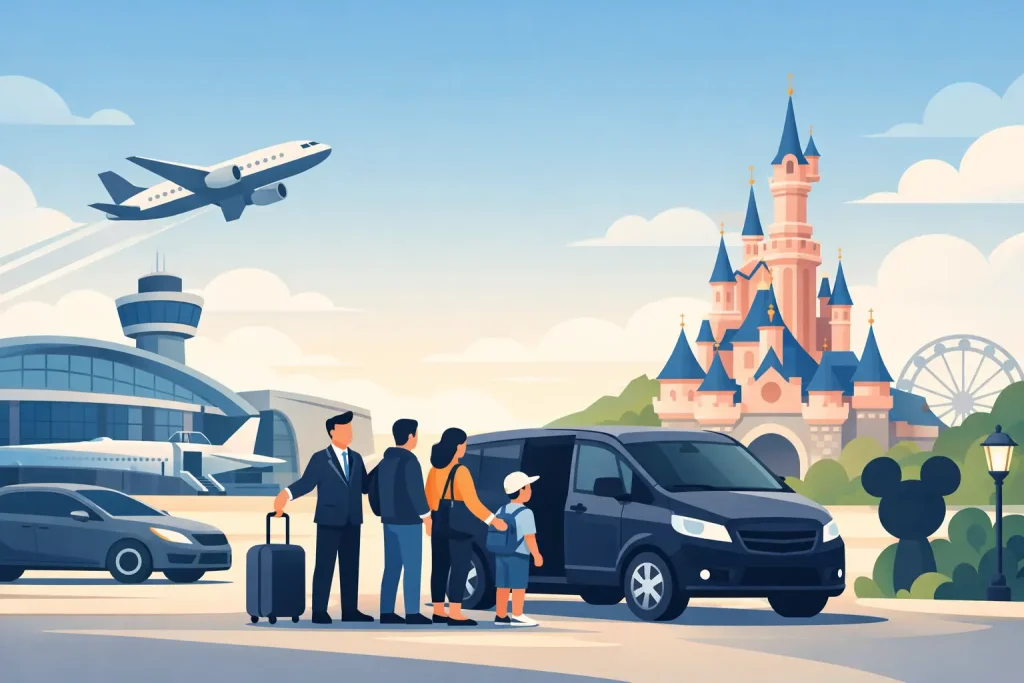
A family airport transfer usually goes wrong before anyone leaves home. It starts with one missing child seat, a driver who cannot locate the hotel, or a booking made for four passengers when there are actually four passengers, two pushchairs and six cases. If you are working out how to organise family airport transfer properly, the key is to book around the real details of your trip, not the ideal version of it.
How to organise family airport transfer without last-minute problems
The first decision is simple. Decide whether you need transport that fits your family as it is actually travelling. That means counting every passenger, every suitcase, every cabin bag and any equipment such as a buggy or travel cot. Families often underestimate space, especially after a long-haul flight when hand luggage feels like an afterthought. A vehicle that is technically big enough can still become cramped, slow to load and stressful on arrival.
Private pre-booked transport is usually the clearest option for families because it removes several moving parts at once. You are not trying to work out train changes with tired children, queue for an airport taxi with uncertain luggage capacity or wait for a shared shuttle that stops at multiple hotels. Door-to-door transport matters more when children are involved, because every extra step tends to add delay.
When comparing options, look beyond price alone. A lower fare can quickly lose its value if you need to split into two vehicles, carry luggage across a station or manage your own child seat arrangements. Families do better when the booking covers the practical basics from the start.
Start with the route, not the vehicle
Many people begin by choosing a car size. It is better to start with the route. Your pickup point and drop-off point affect timing, access and the kind of service you need. A transfer from Charles de Gaulle to a Disneyland Paris hotel is very different from an arrival at Orly followed by a stop in central Paris and then a late check-in at a resort.
Be precise with locations. Use the full airport, train station, hotel name or flat address. If you are staying at Disneyland Paris, give the exact hotel rather than just writing “Disneyland”. The same applies in Paris. A driver needs a clear address, not a general area. This is especially important for international travellers who may not realise how many hotels and entrances can exist in the same district.
If your journey includes more than one stop, decide whether that is genuinely necessary. A multi-stop booking can be useful if one part of the family is staying in Paris and another is continuing to Disneyland Paris. It can also save money compared with separate trips. But every extra stop adds time, and with children that can matter. The right choice depends on ages, arrival time and how much luggage you are carrying.
Check arrival and departure timings properly
Flight time alone is not enough. For arrivals, consider passport control, baggage reclaim and the time needed to gather children, prams and hand luggage. For departures, work backwards from the airport check-in target, not just the flight departure time. Families generally need more margin than solo travellers.
If you are arriving by train rather than plane, the same rule applies. Stations can be busy, platforms can change and it often takes longer than expected to leave the station with children and luggage. Build that into the transfer plan rather than assuming a fast handover.
Child seats are not a small detail
This is the part that should never be left until the end of the booking. If children need a child seat or booster seat, say so at the point of reservation and give the ages clearly. Do not assume the driver will have the right equipment available unless it has been requested in advance.
Different ages need different seat types, and families are often travelling with a mix. One infant seat, one child seat and one booster seat is a common setup. If you only enter “children travelling”, that does not provide enough information. A proper booking should specify exactly what is required.
There is also a practical question here. Some families prefer to travel with their own seats, especially on longer itineraries. That can work, but it also creates more luggage and more handling on arrival. If your transport provider can supply the correct seats in advance, that is usually the simpler option.
Luggage space needs an honest count
Families rarely travel light, even when they intend to. Large cases, cabin bags, shopping, pushchairs and children’s essentials add up quickly. The best way to avoid issues is to count by type, not by guesswork. Two adults and two children might still need a van if the luggage volume is high.
This matters even more on airport routes to Disneyland Paris, where families often travel with extra bags for a longer stay. The vehicle should suit both the passenger count and the luggage load. Booking too small a vehicle is one of the most common causes of delay at pickup.
If one item is awkward in size, mention it. Foldable buggies, mobility equipment and oversized suitcases can affect loading. A transport company can plan properly only when it has the full picture.
How to organise family airport transfer for arrivals with children
Arrival day is when convenience matters most. Children are tired, adults are trying to stay on schedule, and no one wants to make transport decisions in the terminal. A pre-booked transfer gives the family one clear next step after landing.
To make that work, your booking should include the flight number, arrival date and expected landing time. The flight number is particularly useful because it allows the journey to be tied to the actual flight rather than a rough estimate. If the flight is delayed, the transfer plan can be adjusted more accurately.
You should also know where the handover takes place. Some services meet inside the terminal, others use a designated pickup area outside. Neither is automatically better – it depends on the airport, the terminal and your preference – but the meeting instructions should be clear before travel day.
For families, direct hotel drop-off is worth prioritising. After a flight, the difference between stopping at the exact hotel entrance and being left a short walk away can feel much bigger than it sounds, especially in rain, at night or with sleeping children.
Departure journeys need the same attention
Return transfers are often booked too casually. Families assume the hotel can sort a taxi or that there will be enough time on the day. That is a gamble, particularly during school holidays, early morning departures or peak travel periods.
A booked departure transfer gives you a fixed collection time, the correct vehicle size and a direct route to the airport or station. It also means the final morning is simpler. You can focus on checkout and the children rather than trying to arrange transport with bags already packed.
What to check before you confirm the booking
Before confirming, review the details as if you were the driver. Are all names, dates and pickup points correct? Is the destination exact? Have you added the right number of passengers, including children? Have you requested child seats and booster seats where needed? Does the luggage count reflect what you will really bring?
Then check the payment arrangement. Some travellers prefer to pay in advance, while others like the option to pay the driver by cash or bank card. What matters is knowing the process before arrival so there is no confusion when the family is tired and ready to move.
It is also sensible to confirm the service type. Private transport means the vehicle is booked for your group rather than shared with other travellers. For families, that usually makes timing easier and avoids unnecessary stops. If convenience is the priority, this is often the strongest fit.
A specialist route provider can make this process much easier. For example, DisneyCab focuses on Paris airports, train stations, city addresses and Disneyland Paris hotels, which helps families book around actual travel logistics rather than generic taxi assumptions.
The best family transfer plan is the one with fewer decisions on the day
Families do not need complicated transport. They need the right vehicle, the right seats, the right address and timing that matches the trip. That is what makes an airport transfer work.
If you organise it early and give complete booking details, you remove most of the usual friction before it starts. That means less waiting, less carrying, fewer surprises and a much easier arrival or departure. For a family trip, that is not a luxury – it is good planning.
The smoothest transfer is usually the one nobody has to think about once the journey begins.